Photo Chemical Machining (PCM) & Chemical Etching
Precision metal components, stress-free, burr-free, from prototype to
production.
NEL Technologies produces precision etched components for complex designs, with optional forming and assembly to deliver production-ready parts with consistent quality for high-compliance industries
What Is Photo Chemical Machining?
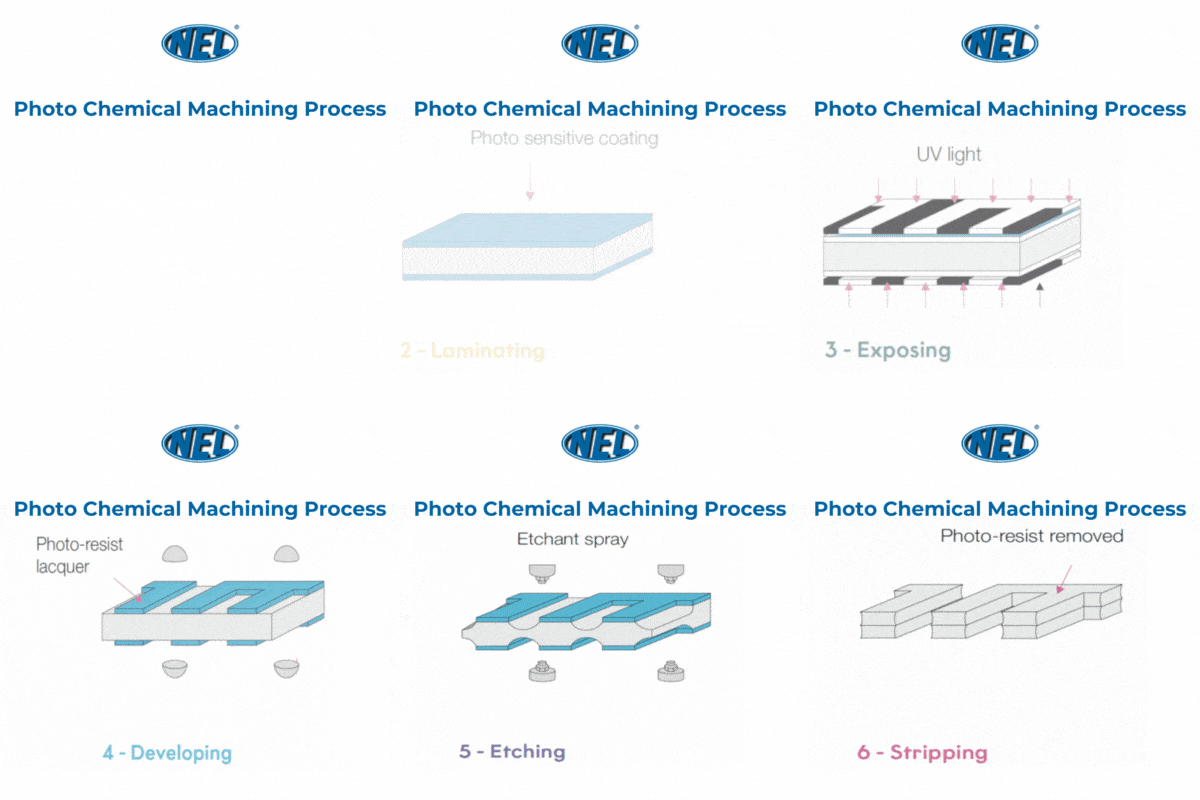
Photo chemical machining (PCM), also known as chemical etching or chemical milling, is a precision manufacturing process that uses controlled chemical etchants to selectively remove metal. A photoresist mask, produced from CAD-generated artwork, protects the areas that form your finished component. The exposed metal is dissolved away, leaving parts with no heat-affected zones or mechanical distortion.
The process is ideally suited to applications where fine detail, tight tolerances and material integrity are critical, supporting most metals and alloys in thicknesses from 0.05 mm to 2 mm, from single prototypes through to high-volume production runs.
From concept to finished component, NEL’s engineering team works with you from initial design through to manufacture, forming and assembly, using AutoCAD Fusion 360 to ensure your parts are right first time.
Precision Etching for Complex Designs
Photo chemical machining offers several advantages over conventional machining methods such as laser cutting, stamping and CNC milling. Because the process uses no mechanical force or thermal energy, components retain the full mechanical and electrical properties of the base material. Complexity does not increase cost, intricate geometries, fine features and tight internal radii are produced from the same photo-tool as simple outlines.
Our chemical etching capability delivers:
- Tolerances typically ±10% of material thickness, with tighter tolerances achievable depending on geometry and material
- Both sides of the material etched simultaneously, enabling half-etch features, fold lines, stiffening ribs and surface detail
- Low tooling costs with fast turnaround, artwork changes are digital, with no hard tooling to
modify or replace - No burrs, no stress, no heat-affected zones, parts are ready for use or secondary processing immediately
- Rapid prototyping and volume production from the same process, with short set-up times
We offer a true turnkey service, including post-machining heat treatment, material hardening, bending, forming and full assembly operations.
Turnkey manufacturing, from chemical etching through heat treatment, forming and assembly, delivered as quality-approved finished components.
Typical Applications
Electronic & Electrical:
EMI/RFI screening cans
Lead frames
Connectors and contact pins
Encoder discs
Precision Components:
SMT solder stencils
Springs and ures
Actuators and valve plates
Filter screens and meshes
Structural & Mechanical:
Washers and gaskets
Boxes with fold lines
Heat sinks and thermal management parts
Labels and decorative automotive components
Perforated plates
Specialists in Photo Chemical Machining & Chemical Etching
Established in 1984 and employee-owned since 2022, NEL Technologies is a trusted UK manufacturing partner for precision-engineered metal components. With over 40 years of experience, ISO 9001/14001 certification and a commitment to getting it right first time, we deliver the quality and consistency your application demands.
Frequently Asked Questions — Photo Chemical Machining
What is chemical etching?
Chemical etching, also known as photo chemical machining (PCM), photo etching or chemical milling, is a precision manufacturing process that uses light-sensitive photoresist and chemical etchants to selectively remove metal from a sheet. A CAD-generated photo-tool defines the component geometry, and the etchant dissolves only the exposed areas, producing parts that are completely burr-free and stress-free.
What materials can be photo chemically machined?
PCM is compatible with most ferrous and non-ferrous metals and alloys, including stainless steel, copper, brass, phosphor bronze, nickel, aluminium and beryllium copper. Material suitability depends on the specific alloy, required tolerances and application conditions, NEL’s engineering team can advise on the best approach for your material.
What material thicknesses are suitable for PCM?
NEL’s photo chemical machining process supports material thicknesses from 0.05 mm to 2 mm. Thinner materials allow finer features and tighter tolerances, while thicker materials can still be etched to produce robust, precision components.
What tolerances can photo chemical machining achieve?
Tolerances are typically ±10% of material thickness as a starting point, with tighter tolerances achievable depending on geometry, material and feature size. For a specific tolerance assessment, share your design with NEL’s engineering team.
How does photo chemical machining compare to laser cutting or stamping?
Unlike laser cutting, PCM does not introduce heat-affected zones or thermal distortion. Unlike stamping, there is no hard tooling cost, making design changes fast and inexpensive. PCM also etches both sides simultaneously, enabling half-etch features, fold lines and surface detail that other processes cannot achieve in a single operation. Complexity does not increase part cost.
Is photo chemical machining suitable for prototyping and production?
Yes. The low tooling cost and fast set-up make PCM efficient for both rapid prototyping and high-volume production. The same process and photo-tools are used at every scale, ensuring consistency from first article through to series manufacture.
What industries commonly use photo chemical machining?
PCM is used across aerospace, automotive, Formula 1, medical diagnostics, telecommunications, electronics, energy and security. Any industry requiring precision metal components with complex geometries, fine features or tight tolerances can benefit from the process.
Can NEL provide services beyond chemical etching?
Yes. We offer a full turnkey service including heat treatment, material hardening, bending, forming and assembly. Components can be delivered as fully finished, quality-approved parts ready for integration into your product. NEL also manufactures flexible heaters and NELTEX® fabric circuits for applications requiring integrated thermal management or textile-based electronics.
What information is needed to get started?
To begin a discussion, provide your material type, thickness, geometry (CAD file or sketch), required tolerances and intended application. NEL’s engineering team will assess feasibility and recommend the most suitable manufacturing approach. Contact us here to start the conversation.