
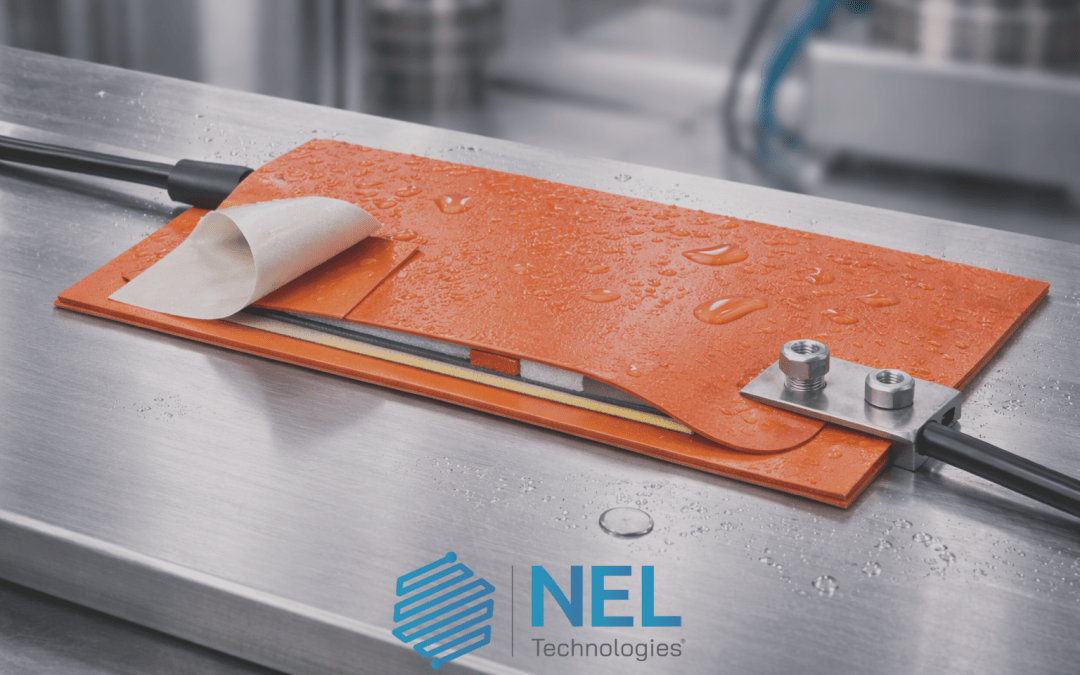
Silicone heater selection comes down to four decisions: thickness, ingress protection, insulation, and mounting method. These choices interact, so getting one wrong often creates problems elsewhere. A thinner build gives you flexibility but limits sealing. A higher IP rating improves protection but stiffens the heater.
This is how each specification affects performance, and where the common trade-offs sit.
Thickness
Silicone heaters range from 1mm to 6mm total build. Thickness controls three things at once:
Temperature capability. Thinner builds shed heat fast, which can limit continuous operating temperature. Above 150°C, thicker construction is usually the safer path.
Flexibility. A 1 to 2mm heater wraps around cylinders and flexes during operation. A 4 to 6mm build suits flat or gently curved surfaces.
Durability. More silicone means better protection against impact, abrasion and handling during maintenance.
A thin heater that bends tightly won’t sustain high temperatures. A thick heater built for durability won’t wrap around tight radii. Decide which matters most.
IP Rating
Four ratings cover most silicone heater applications:
| IP Rating | Protection | Typical Use |
| IP54 | Splash-resistant | Indoor, occasional condensation |
| IP65 | Water jet resistant | Washdown, outdoor |
| IP67 | Temporary immersion | Submersion during cleaning |
| IP68 | Continuous immersion | Permanently wet environments |
Higher ratings need thicker encapsulation and tighter edge sealing, adding cost and stiffness. IP54 handles condensation and splashes perfectly well. Jumping to IP67 for that environment produces a more expensive, stiffer heater with no practical benefit.
Cable entry sealing is frequently overlooked here. The heater body can meet IP65, but if the cable exit isn’t sealed to the same standard, moisture still finds its way in.
Insulation
Insulation layers between the element and outer build, typically fibreglass, Kapton or additional silicone, direct heat into one surface and reduce loss from the back. That means better efficiency and lower wattage to reach target temperatures.
Skip insulation if you’re heating from both sides, heat loss isn’t a concern, or you’re running moderate temperatures at low watt density. Above 3 W/cm² or on high duty cycles, insulation starts making a measurable difference.
Mounting
Adhesive (PSA) gives fast installation and good thermal contact on smooth, clean, flat surfaces. Limitations: temperature ceilings, surface preparation dependency, and difficult removal.
Mechanical mounting (bolts, clips, spring pressure) handles higher temperatures, rough surfaces and maintenance access. Trade-off: more installation effort and getting clamping pressure right. Too little creates hotspots. Too much damages the heater.
Above 180°C, or where maintenance access matters, mechanical mounting is the more reliable long-term option.
Where These Choices Conflict
Thin + high IP. Less material means less to seal with. Combining a 1 to 2mm build with IP67 usually requires custom construction.
High IP + flexibility. Better sealing means thicker silicone, which means less bend. Reducing exposure through enclosure design can let you specify a lower IP instead.
Harsh environment + PSA. Dirt, moisture and rough surfaces push toward IP65+, but those same conditions undermine adhesive bonding. Mechanical mounting is almost always the better pairing.
Common Failures and How to Avoid Them
NEL has manufactured flexible heaters for aerospace, medical, satellite and industrial applications for over 40 years. The same failure patterns come up repeatedly:
Adhesive failure from exceeding PSA temperature limits or poor surface preparation. Mechanical mounting avoids this.
Moisture ingress from underspecified IP or weak cable entry sealing. Treat cable entry as part of the IP specification.
Hotspots from uneven clamping in mechanical mounting. Control force and surface flatness.
Thermal cycling damage when thin heaters flex repeatedly during heating and cooling. Thicker builds handle this better.
For system-level context, see the role of flexible heaters in thermal management.
Getting It Right First Time
The right build depends on six things: continuous operating temperature, moisture exposure, flex requirements, mounting surface condition, maintenance needs, and available space.
NEL’s engineering team works through these trade-offs before tooling or production begins. Share your temperature, environment and mounting details and we’ll recommend a construction that fits.
You can also explore our flexible heater capabilities to see what’s available.